When the grid goes dark, you don't.
Battery backup for homes, wells and cabins across Shasta County. Add it to the solar you already have, or start fresh. Designed and installed by the Redding crew that has been doing solar since 1985.
Why Shasta County homeowners are adding batteries
Two things changed. The first is outages. During high fire danger, PG&E cuts power to whole areas as a precaution, and foothill neighborhoods around Redding are exactly the kind of places that get shut off. A shutoff can last a day or longer.
The second is the math. New solar customers in PG&E territory are on California's Net Billing Tariff, often called NEM 3.0. Power you send back to the grid earns far less credit than it used to, so storing your daytime solar and using it in the evening is usually worth more than exporting it.
Your panels alone won't keep the lights on
This surprises a lot of people. A standard grid tied solar system shuts itself off when the grid goes down. It's a safety rule that protects line workers. With a battery and the right backup equipment, your home separates from the grid on its own and keeps running on stored power, and your panels refill the battery when the sun comes up.
- Keeps chosen circuits running through an outage: fridge, well pump, lights, internet.
- Uses your own solar after sunset instead of buying power at evening rates.
- Recharges from your panels every day during a long outage.
- Runs silently, with no fuel to store and no extension cords to run.
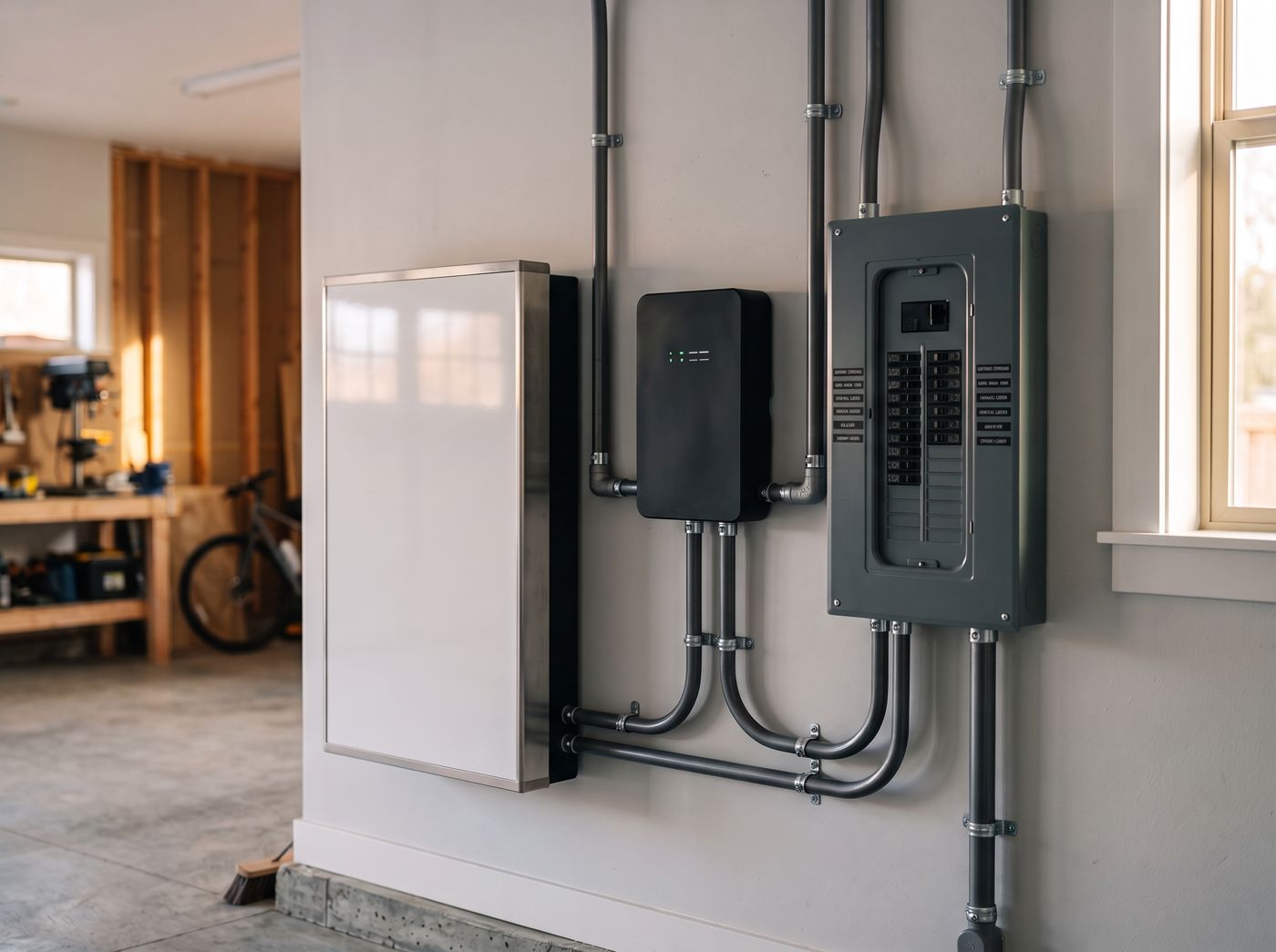
What actually goes on your wall
A backup system is three parts working together. The battery stores your solar. The backup gateway senses an outage and separates your home from the grid in a fraction of a second. A backup panel, when needed, holds the circuits you choose to keep running.
We'll recommend the battery that fits your system, your loads and your budget, and tell you plainly why. We'll also check whether you qualify for current battery incentives, including California's Self Generation Incentive Program, which offers extra support to some households in high fire threat areas or with medical needs.
Three ways to get backup.
Add to your existing solar
You already have panels. We add a battery and backup equipment and tie it into your system, including many systems we didn't install.
Solar plus battery
Designed as one system from the start, sized to your usage and to the circuits you want covered in an outage.
Off grid
For cabins, shops and rural land where running a power line costs too much or isn't possible. Built to stand on its own.
What do you need running in an outage?
Tap everything you couldn't go a day without. Green ones are light loads. Orange ones are heavy and change the size of the system.
How a backup job goes.
We read a year of your bills, look at your electrical panel, and ask what matters most in an outage.
Battery size, which circuits, and honest options at a couple of price points.
We handle the permit, the inspection and the utility paperwork for you.
We show you exactly what happens in an outage and set up monitoring on your phone.
Questions people ask us.
Straight answers to what people ask us most. Still unsure? Call us and talk to a person who's done this for decades.
Will my solar panels work during a power outage?
Not by themselves. A standard grid tied solar system shuts off when the grid goes down, as a safety rule that protects line workers. With a battery and backup equipment, your home separates from the grid automatically and keeps running, and your panels recharge the battery during the day.
Can you add a battery to my existing solar system?
Usually, yes. It depends on your inverter, your electrical panel and the age of the system. We look at your equipment on a site visit and tell you exactly what it takes, including on systems we didn't install.
How long will a battery run my house?
It depends on what you run and how much storage you have. Essentials like the fridge, lights and internet can stretch a long way, especially with your panels recharging the battery each day. Air conditioning, electric heat and well pumps use it faster. We size the system from your actual loads.
Is a battery better than a generator?
They do different jobs. A generator runs as long as you have fuel. A battery is silent, needs no fuel, switches over on its own, recharges from your solar, and saves you money on normal days too. Some rural customers keep both.
Does a battery make sense under NEM 3.0?
Often more than it used to. Under California's Net Billing Tariff, power you export earns much less credit, so storing your daytime solar and using it in the evening is usually worth more than sending it to the grid.
Will I need a new electrical panel?
Sometimes. Older or full panels may need an upgrade or a separate backup subpanel. We check during the site visit and include it in the quote, so there are no surprises.
Can you service a battery someone else installed?
Yes. We diagnose and service systems from other installers, including companies that are no longer in business.
Do you build off grid systems?
Yes. For cabins, shops and rural property where a utility line is too expensive or not possible, we design solar and battery systems built to stand on their own.